
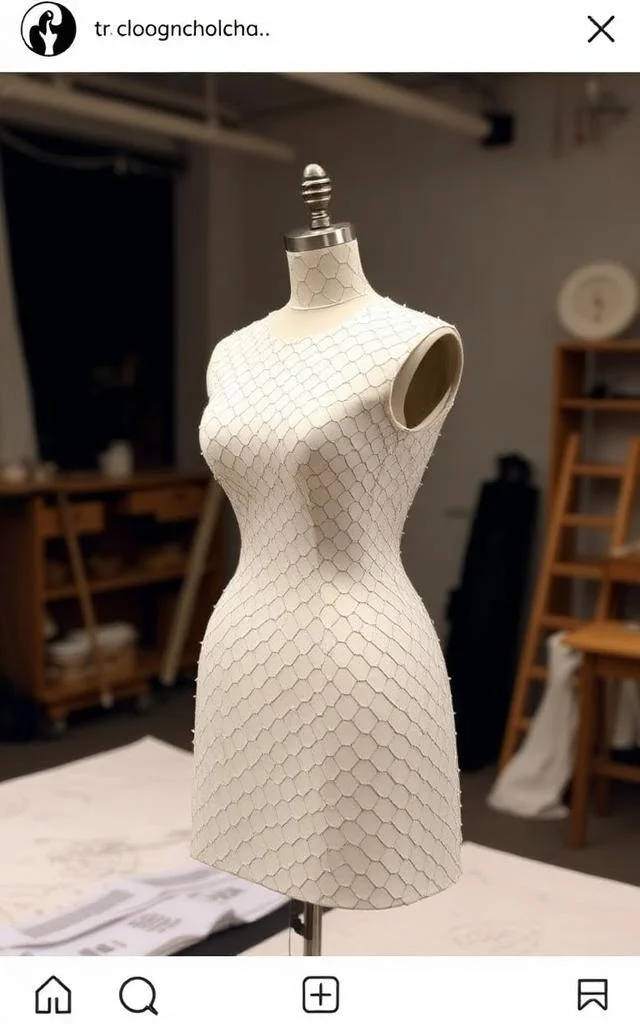
In traditional pattern making, design begins on flat 2D paper using mathematical grids, dart rules, and rectangular seam allowances. Transformational Reconstruction (TR), invented by Japanese master Shingo Sato, turns this workflow completely inside out.
Draping Directly into 3D Geometric Form
Instead of calculating dart transfers on flat drafting paper, TR starts by dressing a mannequin in a plain, closely fitted calico bodice. The designer draws expressive, sculptural, or spiral cut lines directly across the 3D surface with marker or tape.
The calico is then removed, cut open along these organic lines, and flattened out onto paper. Conventional bust and waist darts vanish—absorbed into dynamic spiral curves, box pleats, or architectural origami facets.
Who is Ready for TR Cutting?
TR is not an alternative to basic sewing; it is an advanced extension. To extract the full power of TR cutting, a maker must already understand fabric grain behavior, seam tension, and standard garment assembly.
For fashion colleges and design institutes seeking to expose their students and faculty to this innovative methodology, explore our dedicated January 2027 Shingo Sato India Tour landing page.